
Sydney's most memorable experiences happen when you venture beyond the Opera House selfies and the harbour bridge climb. The real Sydney adventures start where the guidebooks usually end, in the valleys and vineyards and national parks that sprawl out from the city limits. You'll find waterfalls carved through sandstone cliffs an hour west, cellar doors pouring varietals from vines older than the federation, and coastal tracks where the Tasman Sea hammers the rocks below your boots. These are the days that stick with you long after you've forgotten which museum you visited on Tuesday.
Why Sydney Adventures Matter More Than Ever
The city itself draws crowds year-round, but the experiences that define a trip increasingly happen outside the CBD. Recent visitor data from Destination NSW shows that regional day trips from Sydney have grown steadily since 2024, with travellers seeking authentic encounters over tick-box attractions. People want fewer crowds, better stories, and the kind of day you can't replicate anywhere else.
That shift reflects what locals have always known: Sydney's real character lives in its surrounding landscapes. The sandstone country west of the city hides gorges and eucalypt forests that predate European settlement by millennia. The volcanic soils of the Hunter Valley produce wines that compete on the world stage. The Royal National Park south of the city protects some of the oldest coastal heathland in the state.
The Geography That Makes It Possible
Sydney sits at the meeting point of three distinct landscapes. To the west, the Great Dividing Range begins its long march north toward Queensland, carving the Blue Mountains from ancient sedimentary rock. East, the Pacific Ocean defines the coast with beaches, bays and headlands shaped by wind and tide. South, the Illawarra Escarpment drops from rainforest to dairy country in a matter of kilometres.
This geography creates adventure options that shift with the season:
- Summer brings early starts and coastal swims after clifftop walks
- Autumn delivers mild days perfect for wine country and longer bushwalks
- Winter sees the Blue Mountains dusted with rare snow and Hunter Valley fires
- Spring lights up the wildflowers in the Royal National Park
The Bureau of Meteorology’s climate data confirms what anyone who's spent a year in Sydney already knows: the weather stays moderate year-round, with average maximums between 17°C and 26°C, making outdoor adventures viable in every month.
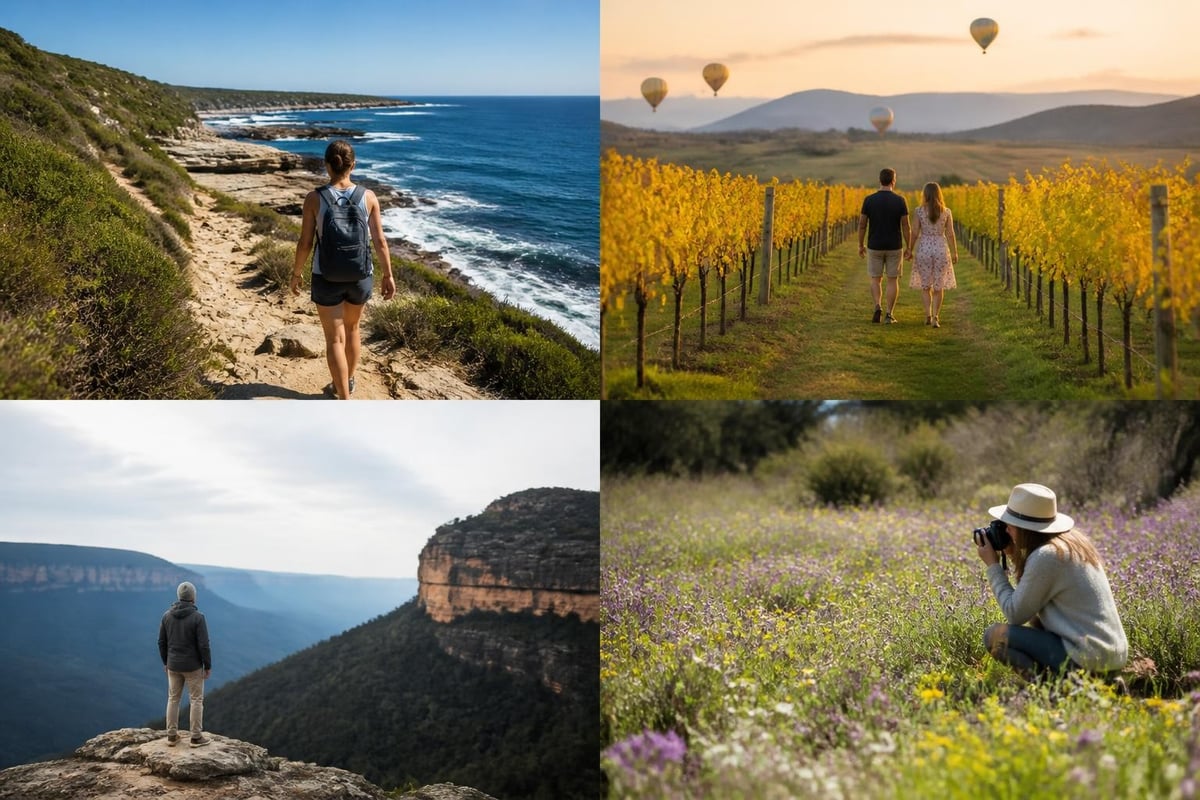
Blue Mountains: The Adventure That's Older Than the City
The Blue Mountains earned World Heritage status for good reason. The plateau drops away into valleys so deep you can watch weather systems roll through below you, standing at the edge of cliffs that fall 300 metres into rainforest. The eucalypt haze that gives the range its name comes from oil in the leaves of millions of trees, creating that signature blue shimmer on hot days.
Most visitors stick to Echo Point and the Three Sisters, which means the better experiences wait just down the road. Wentworth Falls offers a proper bushwalk beneath sandstone overhangs, with the National Pass threading between cliff faces and cascades. The Undercliff Track rewards competent walkers with solitude and geology lessons carved into every rockface.
Wildlife Encounters That Actually Work
Featherdale Wildlife Park sits at the base of the mountains, but don't let the location fool you. The animals here roam in open enclosures, not cages, and the early morning timing matters more than most people realise. Koalas sleep through the heat of the day, but catch them between 8:30 and 10:00 and you'll see them moving, feeding, and occasionally being cranky with each other.
The kangaroos and wallabies in the main paddock have worked out that visitors mean food, so they'll come right up to you, but the wombats remain gloriously indifferent. That's the appeal: these aren't performing animals, they're going about their day while you happen to be watching.
If you're building a day that combines wildlife with proper mountain time, the Private Blue Mountains Tour: Featherdale and Wentworth Falls matches the early park visit with a guided walk tailored to your fitness level, then finishes with the iconic lookouts once the afternoon light hits the valley.
Hunter Valley: Beyond the Wine Clichés
The Hunter Valley produces wines that sommeliers in Paris and New York take seriously, but the region's real strength is the sheer variety packed into 250 square kilometres. You can taste a Semillon at Tyrrell's from vines planted in 1908, sample a Verdelho at a family-run cellar door opened last year, and finish with single-malt whisky at a distillery that didn't exist five years ago.
What makes a good Hunter Valley day:
- Start with a plan, then abandon it – The best discoveries happen when you veer off script
- Mix the famous with the obscure – Combine a well-known label with a tiny producer
- Eat properly – The cheese, chocolate and lunch matter as much as the wine
- Don't rush – Seven hours gives you time to linger
The region's grown beyond wine, with craft breweries, distilleries, cooking schools and even a chocolate factory filling the gaps between vineyards. The food side has matured too, with restaurants that could hold their own in Sydney's dining precincts.
Getting the Timing Right
Harvest runs from January through March, when you'll see pickers in the rows and the whole valley hums with activity. Vintage releases happen in spring, making September and October ideal for tasting the new wines alongside the established library stock. Winter brings truffle season and the kind of crisp mornings that make a cellar door fire feel earned.
| Season | What's Happening | Best For |
|---|---|---|
| Summer (Dec-Feb) | Harvest, warm days, outdoor dining | Seeing the vines in action, late tastings |
| Autumn (Mar-May) | Vintage releases, mild weather | New wines, long lunches, events |
| Winter (Jun-Aug) | Truffle season, cosy cellar doors | Comfort food, smaller crowds |
| Spring (Sep-Nov) | Wildflowers, perfect weather | Outdoor tastings, cycling, photography |
Coastal Adventures South of the City
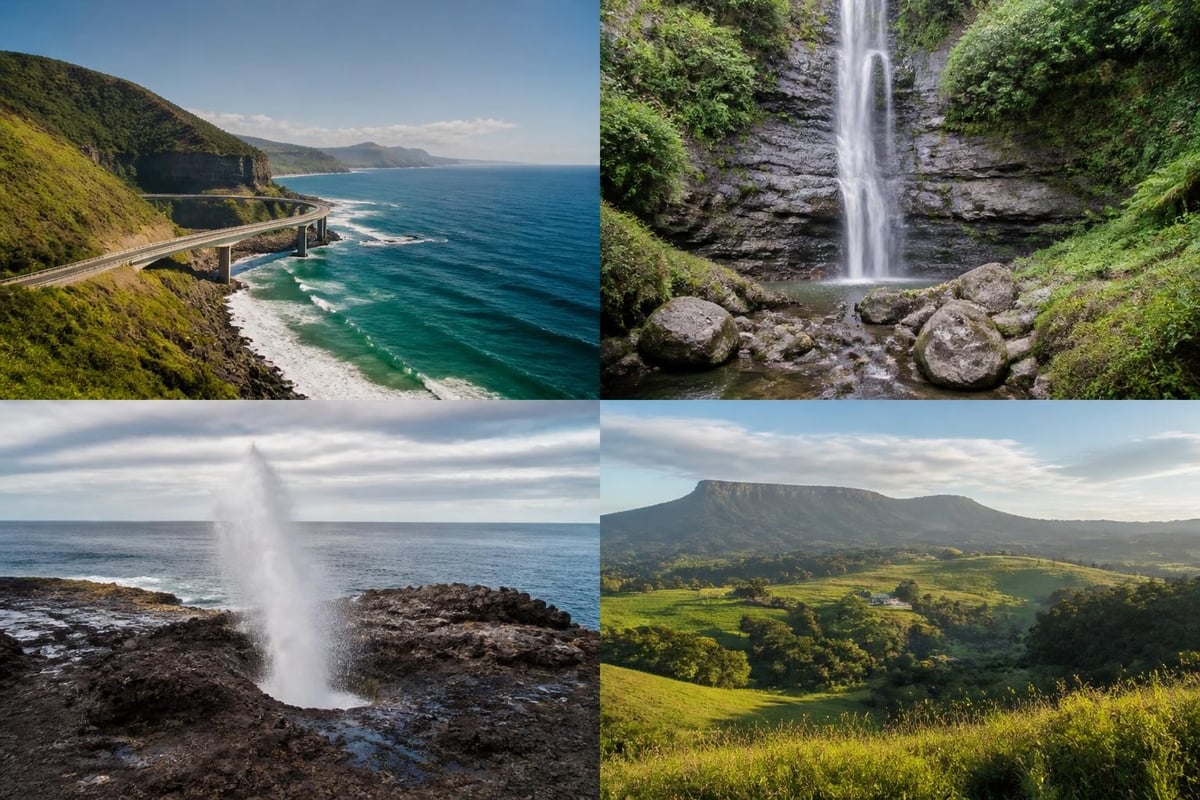
The Grand Pacific Drive strings together coastal lookouts and hidden beaches from the Royal National Park down to Kiama, with the Sea Cliff Bridge suspended above the ocean for a 660-metre stretch that feels more dramatic every time you drive it. The road opened in 2005 after rockfalls made the old route too dangerous, and the engineers created something better than a bypass.
Visit NSW’s coastal walks guide covers the famous Bondi to Coogee route, but the South Coast tracks offer more challenge and less company. Wattamolla in the Royal National Park drops a waterfall straight into a lagoon that opens to the beach, creating a rare combination of fresh and saltwater swimming in the same spot.
Kiama and the Blowhole
The Kiama Blowhole shoots seawater 25 metres into the air when the swell and tide align, but the real show happens at the smaller blowhole around the point, where the geology creates a more reliable jet. The town itself has grown from a fishing village into a proper destination, with cafes and restaurants that justify the two-hour drive even if the blowhole's having a quiet day.
Berry sits 20 minutes inland, where the main street's filled with antique shops, galleries and bakeries that do excellent pies. The detour adds half an hour but breaks up the drive and gives you a completely different character to the coastal stretch.
Making Transport Part of the Adventure
Getting out of Sydney used to mean hiring a car and navigating your way through suburban sprawl before hitting the open road. These days the options have expanded, though each comes with trade-offs. Transport NSW’s travel guide explains the public transport connections, which work well for some destinations but leave you stranded at others.
Trains reach Katoomba in the Blue Mountains every hour, dropping you in the heart of the towns but leaving you reliant on local buses or taxis to reach the actual lookouts and walks. The Hunter Valley has no train service, making it effectively impossible to visit without a car or private transport. The South Coast stations at Kiama and Berry connect to the main Sydney line, but again, you're stuck once you arrive unless you're prepared to walk or pay for local transfers.
Private transport solves these problems while adding flexibility:
- Start early to beat crowds and heat
- Change plans based on weather or interest
- Stop at unmarked lookouts and hidden spots
- Skip the driving after wine tastings
- Carry bushwalking gear without lugging it on trains
A private guide adds local knowledge that turns a good day into an excellent one. They know which lookouts get afternoon light, which cellar doors pour generously, and which tracks stay muddy three days after rain.
First Nations Connections to Sydney's Adventures
The landscapes surrounding Sydney hold thousands of years of Indigenous history, though you'd never know it from most tourist itineraries. The Australian Museum’s First Nations resources detail the Gundungurra, Dharawal and Wonnarua peoples' connections to the Blue Mountains, South Coast and Hunter Valley respectively, with rock art, ceremonial sites and songlines that predate the pyramids.
The Blue Mountains' name in Gundungurra language is Gulumada, and the valleys held spiritual significance as meeting places between coastal and inland nations. The Three Sisters rock formation carries a creation story that explains their shape and position. Recognising these connections adds depth to the landscape you're walking through.
Cultural Awareness on Sydney Adventures
Respect for Country means more than reading a plaque at a lookout. It means understanding that the land holds stories and significance beyond the scenic value. Sydney Harbour National Park has started incorporating Aboriginal perspectives into interpretation, and that approach is slowly spreading to regional areas.
When you're planning Sydney adventures, consider supporting Indigenous-guided experiences where available. Several operators in the Blue Mountains now offer walks that explain the traditional uses of plants, the meaning of rock art, and the seasonal patterns that governed life in the mountains for millennia before European settlement.
Food and Drink That Matches the Setting
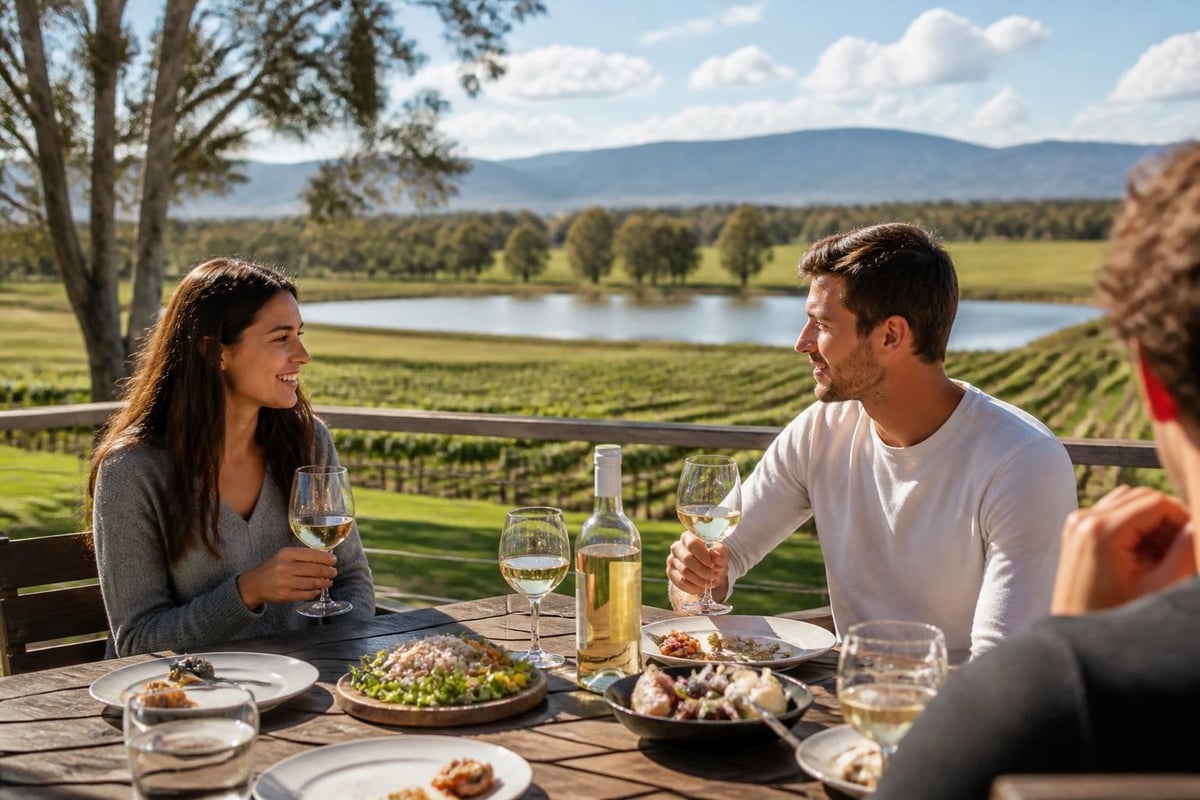
Sydney adventures work best when the food matches the landscape. That means wood-fired pizzas in a Blue Mountains village after a morning walk, long lunches at Hunter Valley restaurants that source from farms visible from the dining room, and fish and chips on a South Coast beach with the ocean right there.
Gourmet Traveller’s Sydney restaurant guide covers the city's fine dining scene, but the regional options have caught up fast. The Hunter Valley particularly has seen a surge in quality, with chefs leaving Sydney to open restaurants that take advantage of valley produce and the steady stream of visitors willing to pay for excellence.
Regional dining highlights worth planning around:
- Leura Garage in the Blue Mountains serves modern Australian with mountain-grown ingredients
- Muse Restaurant in the Hunter Valley holds a chef's hat and matches the food to estate wines
- The Wild Flower Bar & Dining in Kiama brings Wollongong-level sophistication to the coast
- Birch Restaurant at Bells at Killcare (technically Central Coast) earned its reputation on seafood
Don't overlook the humble pub meal either. A counter schnitzel at a mountain pub after a full day's walking tastes better than it has any right to, purely because you've earned it.
Planning Your Sydney Adventures by Season
Each season shifts what works best, and the difference matters more than you'd think. Summer's heat makes early starts essential in the mountains and wine country, with most of your activity finished by 2pm before the temperature peaks. The coast stays comfortable later, with sea breezes keeping the clifftop walks pleasant into the afternoon.
Autumn brings the best all-around conditions, with mild days, stable weather, and autumn colours in the Hunter Valley gardens and Blue Mountains gullies. The crowds thin out after school holidays, and accommodation rates drop accordingly. This is when locals plan their own Sydney adventures, which tells you everything you need to know.
Winter sees the Blue Mountains at their most atmospheric, with mist rolling through the valleys and occasional snow on the higher peaks. The Hunter Valley shifts into truffle season and slow-cooked comfort food. The South Coast stays mild, though the ocean's too cold for swimming unless you're committed.
Spring delivers wildflowers across the Royal National Park, with heath and banksias blooming September through November. The weather stays unpredictable, with warm days interrupted by cold snaps, but the variety of conditions creates dramatic skies and excellent photography.
Small Group vs Private: Choosing Your Adventure Style
Small group tours cap numbers at 15, keeping the experience social without tipping into bus-tour territory. You'll meet other travellers, share the day's discoveries, and benefit from economies of scale that keep prices reasonable. The trade-off is flexibility: the itinerary stays fixed, timing runs to schedule, and you can't deviate for personal interests.
Private tours flip that equation entirely. Your group, your vehicle, your day. Want to spend an extra hour at a waterfall? Done. Prefer to skip the tourist stop everyone else visits? No problem. Ready to leave earlier than planned? The guide works for you.
| Factor | Small Group | Private |
|---|---|---|
| Flexibility | Fixed itinerary, set timing | Fully customisable on the day |
| Social | Meet other travellers | Just your group |
| Pickup | CBD hotels only | Anywhere in Sydney |
| Pace | Set for the group | Matched to your fitness/interest |
| Cost | Lower per person | Higher, but split across your group |
| Special interests | General highlights | Tailored to what you want |
For couples or solo travellers on a budget, small groups make sense. For families, friend groups, or anyone with specific interests (photography, birdwatching, serious wine knowledge), private gives you value that's hard to quantify but easy to feel.
What Makes Sydney Adventures Different
Sydney's geography concentrates world-class experiences within a two-hour radius of the CBD. You can swim in the ocean in the morning, walk beneath waterfalls at lunchtime, and taste wines in the afternoon without rushing or spending the whole day in a car. That density of options doesn't exist in many cities.
The quality level stays consistently high too. The Blue Mountains' World Heritage listing protects landscapes that rank alongside anything in the country. The Hunter Valley produces wines that export globally and win international competitions. The coastal drives and beaches compete with Victoria's Great Ocean Road and Queensland's Sunshine Coast without the crowds.
The infrastructure supports proper exploration rather than just sightseeing. Walking tracks are well-maintained, with clear signage and safety barriers where they're needed. Cellar doors welcome visitors seriously, with knowledgeable staff and proper tasting facilities. Restaurants use local produce and change menus seasonally.
Most importantly, these experiences stay genuine. They haven't been polished into theme-park versions of themselves. The bushwalks feel wild, the wine tastings focus on the product not the performance, and the coastal villages remain working towns that happen to attract visitors rather than existing solely for tourism.
The best Sydney adventures combine landscape, culture and connection in ways that photographs never quite capture. Whether you're after mountain walks, wine country afternoons or coastal drives, the regions surrounding Sydney deliver experiences that justify the journey and reward curiosity. Sydney Adventure Tours builds days around what matters to you, with private and small group options that match your pace, interests and group size. Get in touch to start planning your own Sydney adventures beyond the harbour.


