
Booking a private guide used to mean phone calls, faxed credit card details and crossed fingers. Today's travellers expect instant availability, transparent pricing and secure payments – whether they're booking a Blue Mountains walk or a Hunter Valley wine day. The best guide booking systems deliver all three while keeping the personal touch that makes a tailored tour worth the premium. Here's how the pieces fit together, what makes a booking flow trustworthy, and why the details matter more than you might think.
What Actually Happens When You Book a Guide
Modern guide booking starts with availability. Real-time calendars pull from the operator's schedule, blocking out days already committed to other groups and leaving open slots bookable by anyone browsing the site. When you select a date and time, the system checks availability again before moving you to the next step – a simple safeguard that prevents double bookings and wasted confirmation emails.

Next comes the itinerary and guest information stage. For private tours, this is where customisation happens. Good systems let you nominate pickup locations, flag dietary needs, request add-ons like wildlife park entries or distillery stops, and note mobility considerations. Small group tours are simpler – you're joining a set itinerary – but you still enter names, contact details and hotel pickups. The data goes straight into the operator's CRM, triggering confirmation emails and pre-trip reminders without manual intervention.
Payment seals the deal. Most guide booking platforms now use tokenised card processing through gateways like Stripe or Adyen, meaning your full card number never touches the operator's server. You'll see an itemised breakdown – tour price, park fees if included, optional extras – before entering payment. Secure payment flows reduce fraud and protect both sides, which is why serious operators avoid cash-on-arrival arrangements for online bookings.
The Role of Booking Software in Guide Services
Tour operators run on booking software that syncs availability, payments and customer communication in one place. Platforms like FareHarbor, Rezdy and Bookeo are common in the Australian market, each offering calendar management, automated emails and integrations with payment processors. When you complete a guide booking on a tour company's website, you're usually interacting with one of these white-labeled systems embedded in the site.
What booking software handles automatically:
- Availability updates across website, Google and third-party listing sites
- Confirmation emails with pickup details, itinerary summaries and what-to-bring lists
- Pre-trip reminders sent 48 hours before departure with weather updates or schedule changes
- Payment receipts with invoice numbers and tax breakdowns
- Waitlist triggers if a tour fills, offering alternative dates or notifying when a spot opens
The best systems also track repeat guests, flag VIP bookings and store preferences – gluten-free, early pickup, prefers front seat – so returning travellers don't re-enter the same information. For operators running private Blue Mountains tours or Hunter Valley days, this detail layer turns a transactional booking into the start of a relationship.
Pricing Structures and What You're Actually Paying For
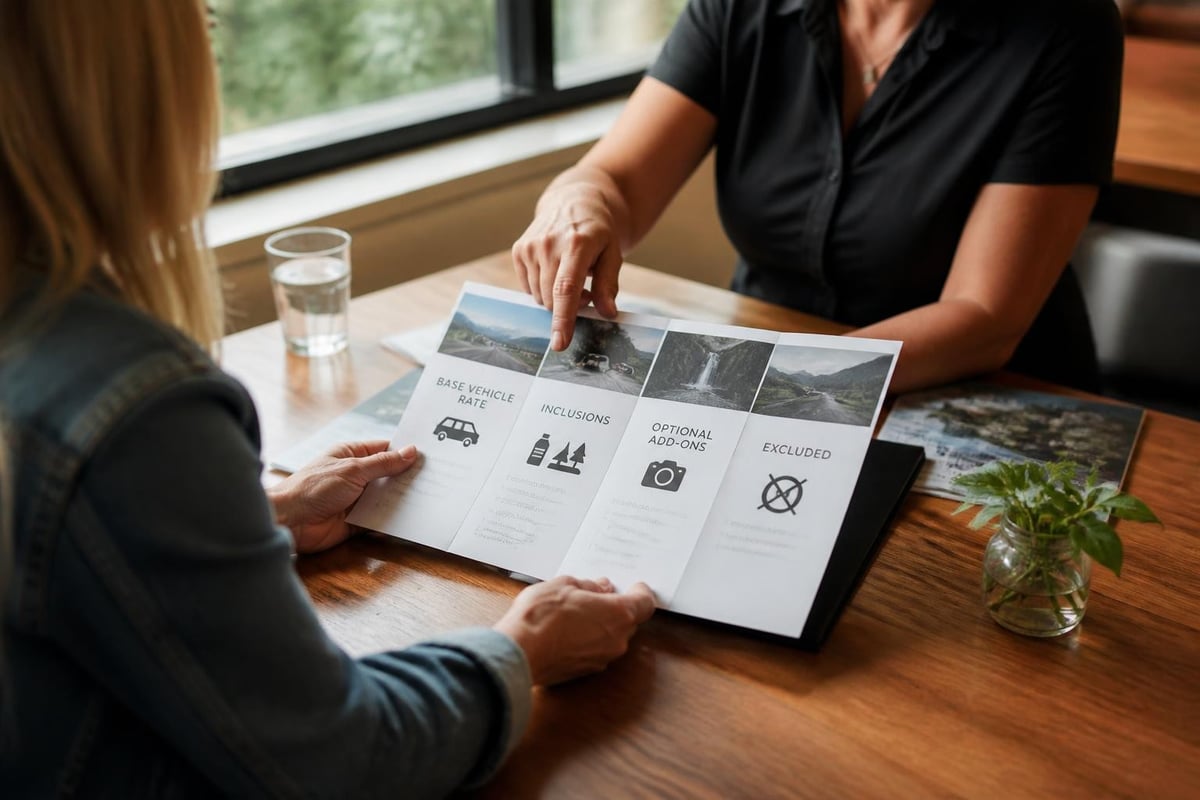
Guide booking transparency starts with pricing. Private tours typically quote per vehicle (for one to six guests, say), while small group tours price per person with a minimum group size. Both models work, but clarity matters. If you're booking a private Blue Mountains day, you need to know whether the quoted rate includes national park fees, Scenic World tickets and lunch, or if those are extras. Ambiguous pricing leads to sticker shock on the day and bad reviews after.
Typical cost components in a private tour booking:
| Item | Usually Included | Sometimes Extra | Notes |
|---|---|---|---|
| Vehicle and guide (full day) | ✓ | – | Base rate for 7-9 hours |
| Fuel and tolls | ✓ | – | Factored into the quote |
| Bottled water | ✓ | – | Standard courtesy |
| National park entry fees | ✓ | ✗ | Varies by operator |
| Attraction tickets (Scenic World, etc.) | ✗ | ✓ | Usually paid on the day |
| Lunch | ✗ | ✓ | Guest choice, guest pays |
| Wine/distillery tasting fees | ✗ | ✗ | Always additional in Hunter Valley |
Deposits and full-payment timing vary. Some operators take a 20-30% deposit at guide booking and collect the balance 48 hours before departure; others charge the full amount upfront. Neither is inherently better, but upfront payment gives operators cash flow to cover fixed costs, while deposit models feel less committed to travellers still finalising plans. Just make sure the cancellation policy matches the payment structure – full payment bookings should offer better refund terms than deposit models.
Cancellation Policies That Actually Make Sense
Cancellation terms are where guide booking trust is won or lost. A 72-hour full-refund window is generous and rare. Most private tour operators offer full refunds for cancellations 7-14 days out, partial refunds (50%) within 3-7 days, and no refund inside 48 hours. Small group tours often enforce stricter terms because a single cancellation affects the group's viability.
Weather cancellations deserve separate treatment. If heavy rain closes walking tracks or smoke from bushfires makes Blue Mountains visits unsafe, operators should offer a full refund or reschedule at no charge. The U.S. Department of Transportation’s consumer protection rules set a high bar for disclosure of change and cancellation fees, and while Australian operators aren't bound by U.S. law, the principles – clear terms, easy-to-find policies, fair treatment – apply anywhere.
COVID reshaped expectations here. Travellers now expect flexible terms for illness or border closures, and many operators build "pandemic clauses" into their policies. The WHO’s travel health guidance reminds us that health disruptions won't disappear, so booking systems need to handle last-minute changes gracefully without leaving operators holding the bag.
Mobile and Accessibility in Guide Booking
Half of tour bookings now happen on phones, often while travellers are already in Sydney and researching what to do tomorrow. That means guide booking flows must load fast on mobile data, auto-fill fields from browser history and process payments without requiring users to pinch-zoom tiny text fields. If your booking form forces someone to landscape-rotate their phone to click "Confirm," you've lost them.
Accessibility goes beyond mobile. ADA web guidance outlines expectations for people using screen readers, keyboard-only navigation or voice control. Booking forms should have clear labels on every field, error messages that explain what's wrong (not just "Invalid input"), and high-contrast text on buttons. This isn't just compliance theatre – it's good design that helps everyone, not just those with disabilities.
What Makes a Booking Confirmation Useful
You've paid, the confirmation email lands. Now what? Great confirmations answer the questions guests will ask in the next 48 hours:
- Exact pickup time and location (not "we'll email you the day before")
- Your guide's name and emergency contact number
- What to bring (water bottle, sunscreen, jacket, walking shoes)
- What's included and what's not (so you know to bring cash for lunch)
- How to change or cancel if plans shift
Poor confirmations say "Your booking is confirmed. We'll be in touch." Great ones feel like a pre-trip briefing. If you're running private Hunter Valley wine tours, your confirmation should mention that tasting fees average $15-$25 per winery and most places are card-only now. That tiny detail saves an awkward conversation at the first cellar door.
Managing Expectations Through the Booking Process
Every guide booking sets an expectation. If your website shows photos of Wentworth Falls in brilliant winter sun and promises "stunning valley views," then delivers a cloudy day with mist blocking the vista, guests feel cheated even though weather isn't your fault. Managing expectations starts with honest marketing and continues through every email.
How to set realistic expectations at guide booking:
- Use real guest photos alongside professional shots
- Mention seasonal variations (autumn colours, winter mist, summer heat)
- Explain fitness requirements clearly ("moderate hills, 3km return walk")
- Flag common issues upfront (weekend crowds at Echo Point, tasting fees in Hunter Valley)
- Offer plan-B options if weather or closures disrupt the itinerary
This honesty pays off in reviews. Tripadvisor’s 2025 transparency report shows that travellers reward operators who communicate clearly, even when things go wrong. A five-star review often starts with "It rained all day, but our guide pivoted to indoor tastings and we had a great time." That flexibility comes from setting honest expectations at booking and empowering guides to adjust.
The Pre-Trip Communication Window
The days between guide booking and departure are when anxiety spikes. First-time visitors worry about what to wear, where to meet, whether the tour will be too strenuous. Operators who send a 48-hour reminder email with weather forecast, final pickup time and a reassuring "Looking forward to showing you the Blue Mountains" turn nervous bookers into relaxed guests.
Some operators go further, texting the night before with "Your guide Sarah will collect you at 7:30am tomorrow from the Hilton lobby. Her mobile is 0412 XXX XXX if you need to reach her." That single text eliminates 90% of morning-of confusion. It's also when you mention if there's been a late change – another guest joining the private tour, a road closure requiring a route tweak, a request to move pickup 15 minutes earlier.

Group Dynamics and Private Booking Considerations
Private guide booking opens the door to customisation that small group tours can't match. Want to spend three hours at a single winery because your partner loves Semillon? Done. Prefer to skip the tourist lookouts and hike the Undercliff Track instead? Easy. Need wheelchair access at every stop? Your guide builds the day around it. This flexibility is why private bookings command premium pricing – you're buying the guide's full attention and the vehicle's entire capacity.
Small group tours trade flexibility for value and social atmosphere. You'll meet other travellers, split the cost across ten or twelve people, and follow a proven itinerary that hits the highlights efficiently. The booking process is simpler because there's less to customise, but group dynamics matter. A well-matched group – similar fitness, shared interests, compatible energy levels – makes the day. Operators can't control chemistry, but they can screen bookings and gently steer mismatched guests toward private options.
When to Choose Private Over Small Group
The guide booking decision often comes down to budget and control. Private tours cost more per person unless you're already a group of four or five, at which point the per-head rate approaches small group pricing. Beyond cost, choose private if you:
- Have mobility needs or young children requiring frequent stops
- Want deep dives into specific interests (native plants, Indigenous history, boutique wineries)
- Prefer your own pace rather than waiting for slower walkers or rushing past things you love
- Value privacy for special occasions (proposals, anniversaries, family reunions)
Choose small group if you enjoy meeting fellow travellers, appreciate the value of shared costs, and trust a curated itinerary. Many operators, including those offering Blue Mountains small group experiences, cap numbers at 15 to keep the experience intimate while delivering economies of scale.
Sustainability and Ethical Considerations in Guide Booking
Where your booking dollars go matters. Operators who pay guides fairly, invest in vehicle maintenance and fuel efficiency, and support local communities create better experiences than those cutting corners to undercut competitors on price. The UN World Tourism Organization’s guidance on sustainable tourism highlights the importance of quality over volume – better to run fewer tours with well-compensated guides and properly maintained vehicles than chase maximum bookings at minimum margin.
Ethical guide booking also means respecting Indigenous sites and stories. If your Blue Mountains tour includes interpretation of Gundungurra or Darug culture, the operator should be working with Traditional Custodians and sharing benefits. Ask during booking how the operator engages with local communities – it's a fair question and the answer tells you a lot about their values.
What Happens After You Book
The guide booking is complete, payment processed, confirmation sent. Now the operator's job is preparation. Your guide reviews your booking notes, checks vehicle fuel and water supplies, confirms pickup addresses and plans the day's route. If you've requested vegetarian lunch options or asked to visit a specific winery, that gets flagged and incorporated.
On the morning, your guide arrives on time (or texts if traffic delays them), greets you by name and kicks off the day you've booked. Everything that happens next – the wildlife encounters, the lookout stops, the lunch spot, the stories shared – flows from the information you provided at guide booking. When it all clicks, you leave a five-star review and recommend the operator to friends. When it doesn't, it's usually because something got lost between booking and delivery.
Technology Trends Shaping Guide Booking
Dynamic pricing is creeping into guide booking systems, adjusting rates based on demand, season and booking lead time. Book a January Blue Mountains tour in December and you'll pay more than if you'd booked in October. It's common in hotels and flights; tour operators are catching up. Some travellers hate surge pricing, but it does smooth demand and reward planners.
AI chatbots now handle basic booking questions – "What's your cancellation policy?" or "Can you pick up from Circular Quay?" – freeing human staff for complex customisation requests. The good bots escalate to a person when the question gets nuanced; the bad ones loop endlessly and frustrate travellers who just want a straight answer.
Emerging booking technologies worth watching:
| Technology | Current Use | Future Potential | Guest Benefit |
|---|---|---|---|
| Dynamic pricing | Limited adoption | Widespread by 2028 | Early-bird savings, off-peak deals |
| AI chat for booking questions | Common | Integrated itinerary planning | Instant answers, 24/7 availability |
| Virtual tour previews (VR/360) | Rare | Standard by 2027 | Confident decisions, fewer surprises |
| Biometric payment (face/fingerprint) | Very rare | Growing via Apple/Google Pay | Faster checkout, higher security |
None of this replaces the human element. The best guide booking experiences blend technology's speed and convenience with a real person's ability to read between the lines, suggest the perfect add-on, or reassure a nervous first-time visitor.
Guide booking has come a long way from faxed forms and phone tag, but the fundamentals haven't changed – travellers want transparency, flexibility and confidence they've chosen well. When you're ready to explore the Blue Mountains, Hunter Valley or South Coast with a guide who knows the hidden corners and local stories, Sydney Adventure Tours handles bookings with the same care we bring to every tour. Get in touch and we'll build a day around what matters to you.


