
A blue mountains day tour sydney gives you a full day in World Heritage wilderness, less than two hours west of the Harbour Bridge. You'll meet Australian wildlife, walk beneath sandstone cliffs, stand above valleys that drop away for kilometres, and lunch in villages where European gardens meet eucalypt forest. The question isn't whether it's worth the trip, it's how to build a day that fits what you actually want to see.
What Makes a Good Blue Mountains Day Tour from Sydney
Most blue mountains day tour sydney itineraries follow a similar rhythm: early start from the city, wildlife first, then lookouts and walks through the middle of the day, finishing with the Three Sisters before heading back. That structure works because it puts animals at their most active in the morning cool and saves the main viewpoints for when the light's best.
The essential ingredients are:
- Wildlife encounter at Featherdale or a similar park where koalas, wombats and kangaroos are close enough to photograph properly
- At least one proper lookout where the Jamison or Grose Valley opens up in front of you
- A walk or ride that takes you below the cliff line into the valley itself
- Lunch stop in Leura, Katoomba or Blackheath, away from the coach park crowds
Private tours let you adjust the balance. If you'd rather spend two hours walking than fifteen minutes, that's straightforward. Small group tours stick closer to the schedule but keep numbers manageable, usually capping at fifteen guests rather than the fifty-seat coaches that dominate Echo Point by midday.
Wildlife First, While the Animals Are Awake
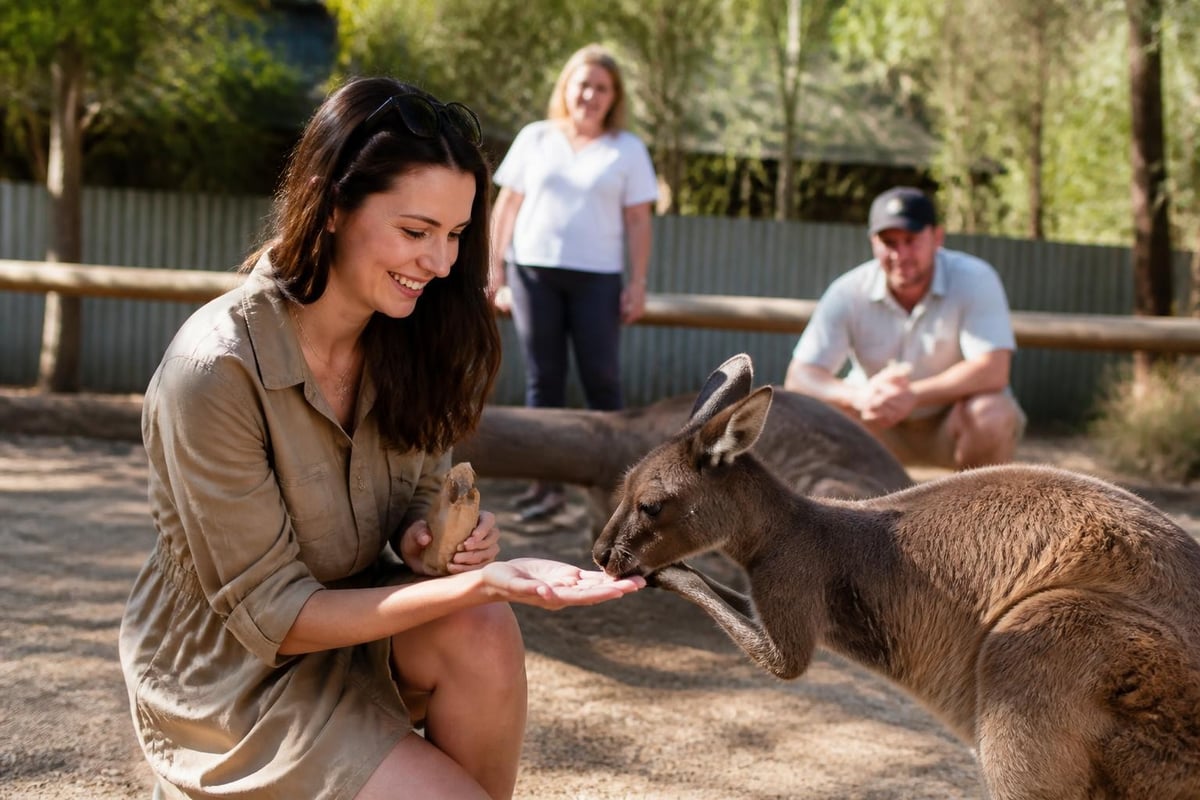
Featherdale Wildlife Park opens early, which is why most quality tours start there. Koalas sleep twenty hours a day, but in the first hour or two after opening, they're often moving between branches or actually looking at you. Wombats are more predictable, though the younger ones are livelier before lunch.
The real advantage is kangaroos and wallabies. In a park setting, they're used to people, so you can sit on the grass and wait for them to hop over rather than trying to spot them in the wild from a moving bus. It's a controlled start to the day that guarantees photos, which matters when you've flown halfway around the world.
Blue Mountains Lookouts: Which Ones Actually Matter
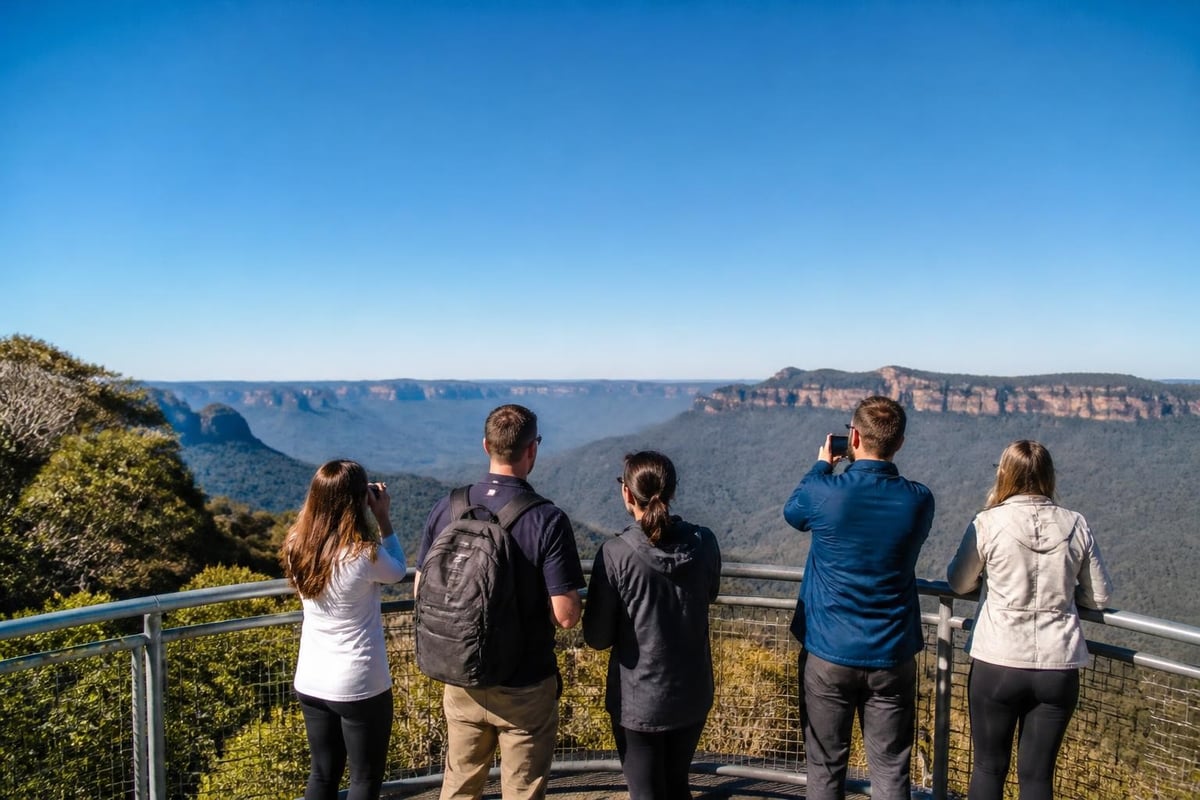
Echo Point and the Three Sisters get the crowds because they're the postcard shot, accessible, and right in Katoomba. The view is legitimate: three sandstone towers in the foreground, the Jamison Valley falling away behind them, and on clear days, you can see sixty kilometres toward the coast.
But Echo Point at 1pm on a summer weekend is a queue for the photo spot, coach fumes and tour groups with matching hats. The same view from Cahills Lookout, five minutes' drive south, is quieter and catches better afternoon light on the valley walls.
| Lookout | Valley | Crowd Level | Best Time | Walk Access |
|---|---|---|---|---|
| Echo Point (Three Sisters) | Jamison | Very High | Early or late | Giant Stairway, Federal Pass |
| Govetts Leap | Grose | Medium | Morning | Junction Rock, Fairfax Heritage |
| Wentworth Falls | Jamison | Medium | Midday | Undercliff, National Pass |
| Cahills Lookout | Jamison | Low | Afternoon | No direct track |
| Pulpit Rock | Grose | Low | Morning | Pulpit Rock Track |
Grose Valley vs Jamison Valley
Most blue mountains day tour sydney trips stick to the Jamison Valley because it's closer to Sydney and holds Echo Point, Scenic World and Wentworth Falls. The Grose Valley, accessed from Blackheath, is wider, less visited and backed by higher cliffs. Govetts Leap and Pulpit Rock both look straight down the Grose, with views that feel more remote even though you're still on sealed roads.
If your tour heads to Blackheath, you're likely getting a guide who's confident enough to venture past the standard circuit. It adds twenty minutes to the drive but cuts the crowds in half.
Walking Options: From Boardwalks to Serious Tracks
You can see the Blue Mountains without leaving the car park, but you won't feel them. Walking gets you under the cliff line where the air smells different, the temperature drops five degrees, and the quiet settles in.
Easiest walks (suitable for any fitness):
- Prince Henry Cliff Walk (Katoomba to Leura Cascades, 1.5 hours one way): paved most of the way, lookouts every few hundred metres
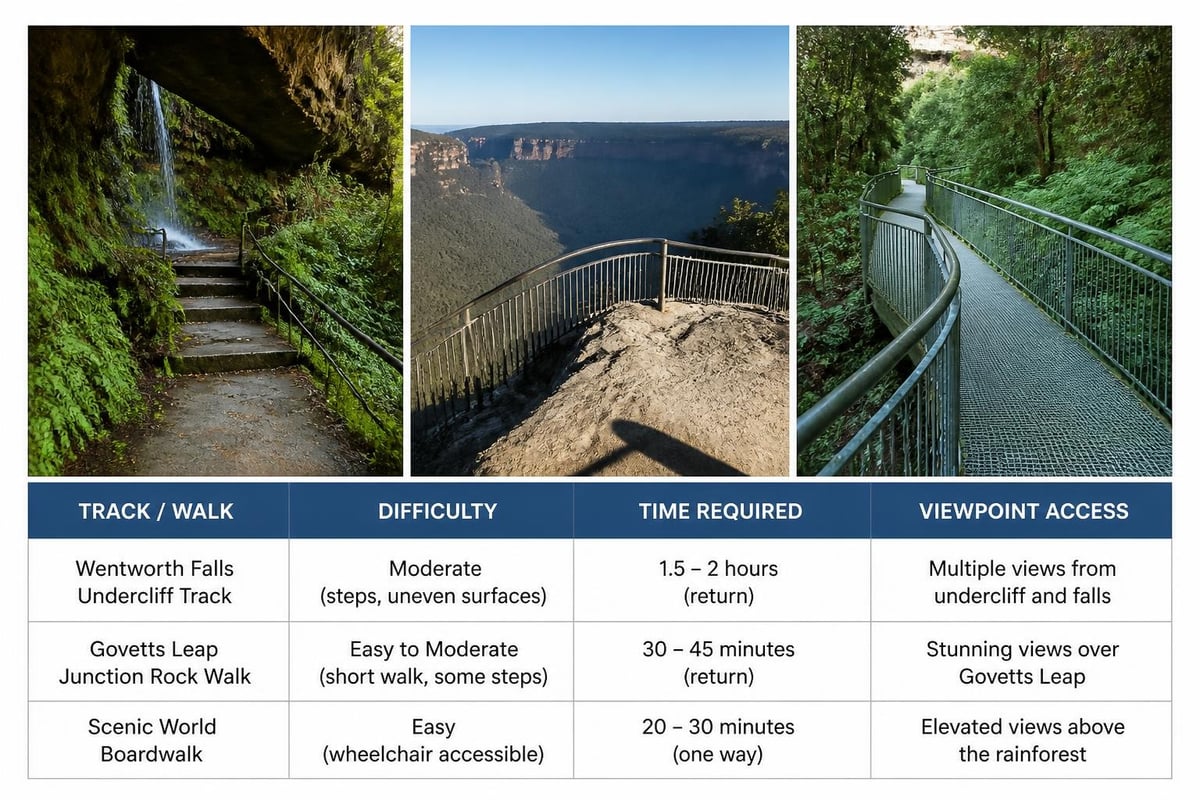
- Scenic World boardwalk (30 minutes loop): rainforest floor, completely flat after you ride the Railway or Cableway down
- Three Sisters and Echo Point circuit (15 minutes): fully paved, wheelchair accessible, crowded
Medium walks (reasonable fitness, some stairs):
- Wentworth Falls Undercliff Track (1 hour return): beneath sandstone overhangs, across creeks, views up to Wentworth Falls from below
- Govetts Leap to Junction Rock (1.5 hours return): Grose Valley views the whole way, steps at the start
- Katoomba Cascades circuit (45 minutes): quiet gully walk below the Scenic World clifftop
Longer walks (good fitness, several hours):
- National Pass (Wentworth Falls, 3-4 hours circuit): carved into the cliff face in the 1900s, stunning but committing
- Grand Canyon Track (Blackheath, 3 hours circuit): slot canyon, rainforest, creek crossings
- Federal Pass (beneath the Three Sisters, 5+ hours one way): links most of the Jamison Valley tracks
A day tour from Sydney rarely gives you time for the longer walks unless you're on a private tour built around one specific track. Most itineraries slot in an hour for the Undercliff Track or similar, which is enough to feel like you've earned the views.
Scenic World: Rides That Show Off the Jamison Valley
Scenic World runs three rides on the cliff edge at Katoomba, all built around the same piece of valley. The Scenic Railway is the steepest passenger railway in the world, dropping 52 degrees down the cliff face into rainforest. It's brief (about ninety seconds) and loud, but it's a genuine thrill if you sit in the front row.
Once you're at the bottom, the Scenic Walkway loops through 2.4 kilometres of rainforest on a raised boardwalk, completely flat and accessible. Ancient tree ferns, the sound of the escarpment waterfalls after rain, and enough interpretive signs to understand what you're walking through without needing a guide.
The Cableway brings you back up, covering 545 metres of valley in five minutes, with a glass floor panel if you want to look straight down. The Skyway is different: it runs horizontally between two cliff tops, crossing above Katoomba Falls and offering 360-degree views from a completely glass-floored cabin.
Scenic World works well on a day tour if:
- Walking ability is mixed within your group (the rides bypass fitness requirements)
- You want to be in the valley without committing to a two-hour bushwalk
- Weather's uncertain (the rides run in light rain, though the Skyway can close in high wind)
The downside is time. Queues on busy days can eat an hour, and the full circuit (all three rides plus the boardwalk) needs ninety minutes even when it's quiet. Your tour needs to budget for that, which usually means shorter stops elsewhere.
When to Book Your Blue Mountains Day Tour Sydney
The climate data for Katoomba shows why timing matters. Summer (December to February) is warm in Sydney but frequently cooler up in the mountains, with afternoon thunderstorms common in January and February. Those storms create waterfalls and mist in the valleys, which is spectacular if you're already up there but can cut visibility to fifty metres.
Seasonal considerations:
| Season | Temperature Range | Rain Days/Month | Pros | Cons |
|---|---|---|---|---|
| Summer (Dec-Feb) | 18-28°C | 8-10 | Long days, waterfalls after storms | Afternoon clouds, busy weekends |
| Autumn (Mar-May) | 10-22°C | 7-9 | Stable weather, autumn colour in gardens | Cooler mornings |
| Winter (Jun-Aug) | 5-16°C | 8-10 | Clear mornings, occasional snow | Cold, short days, icy lookouts |
| Spring (Sep-Nov) | 12-23°C | 8-10 | Wildflowers, jacarandas in villages | Variable conditions |
Winter gives you the clearest mornings for valley views, especially after a cold night when mist fills the valley floor at sunrise. But it's properly cold by Sydney standards (sometimes below freezing at Echo Point), and the sun sets early enough that afternoon lookouts need to happen by 4pm.
Autumn is the safest bet for international visitors: settled weather, comfortable walking temperatures, and the European trees in Leura and Katoomba turn colour through April and May.
Private Tours vs Small Group Tours
The choice comes down to flexibility against cost. A Blue Mountains Private Tour lets you start when you want, change the itinerary on the day, and spend two hours at Wentworth Falls if you'd rather walk than ride the Scenic Railway. You can add Blackheath, skip the crowds entirely, or head to lookouts that don't appear on group itineraries.
Private tours make sense when:
- Your group has specific mobility needs or fitness levels
- You want to focus on photography and need to wait for light
- You're travelling with kids who need flexibility for breaks and pace
- You'd prefer less-visited spots over the standard circuit
Small group tours cap at twelve to fifteen guests, which keeps the vehicle comfortable and stops the guide from spending half the day doing headcounts. The itinerary is set, but it's built around what works, with enough buffer time that you're not rushing through lunch to stay on schedule. They run daily from Sydney CBD hotel pickups, which removes the logistics of meeting points and parking.
What's Included (and What Isn't)
Most quality blue mountains day tour sydney operators include national park entry fees and water, and cover vehicle costs and guide time. What varies is lunch and entry fees to Featherdale or Scenic World.
Typically included:
- National Parks entry fees
- Hotel or central Sydney pickup and return
- Air-conditioned vehicle
- Bottled water
- Local guide
Usually at your own cost:
- Lunch (expect $20-40 per person depending on where you eat)
- Featherdale Wildlife Park entry (around $35 adult)
- Scenic World rides (around $50 for all three, less for single rides)
- Coffee and snacks
The private tours often include more because they can budget per group rather than per person. Small group tours keep optional costs separate so guests who want to skip Scenic World or bring their own lunch aren't paying for something they won't use.
Building Your Own Itinerary from Sydney
If you're driving yourself, the logistics aren't complicated, but the timing is tighter than it looks. Sydney to Katoomba is 110 kilometres via the M4, usually ninety minutes outside peak hour but easily two hours if you hit morning traffic through Parramatta and Penrith.
Sample self-drive timeline:
- 7:00am – Leave Sydney (avoid 8am rush)
- 8:45am – Arrive Featherdale Wildlife Park (Doonside, before the mountains)
- 10:00am – Continue to Wentworth Falls
- 10:30am – Undercliff Track walk (1 hour)
- 12:00pm – Lunch in Leura or Katoomba
- 1:30pm – Scenic World or continue to Echo Point
- 3:00pm – Three Sisters and cliff lookouts
- 4:00pm – Start return to Sydney
- 5:45pm – Arrive Sydney (if traffic cooperates)
Parking at Echo Point and Scenic World is paid and fills early on weekends. The detailed Echo Point map shows the car park and overflow areas, plus walking track connections if you want to explore beyond the main lookout.
Public Transport to the Blue Mountains
The Blue Mountains Line train runs from Central Station to Katoomba in just over two hours, with services roughly hourly through the day. It's cheap (around $10 each way with an Opal card) and gets you there, but you're then on local buses or walking between lookouts.
The 686 bus runs a loop connecting Katoomba, Leura and Echo Point, but it's infrequent (every one to two hours) and doesn't reach Wentworth Falls, Govetts Leap or Blackheath efficiently. Featherdale is near Doonside Station, which is on the same line but forty minutes before Katoomba, meaning you'd need to backtrack.
Public transport works if you're staying overnight in Katoomba and have time to explore on foot. For a day trip from Sydney where you want to cover wildlife, walks and lookouts, it's frustratingly slow.
Food Stops in the Blue Mountains
Katoomba has the most options, from bakeries and cafes near the station to sit-down restaurants on Katoomba Street. Leura is smaller but prettier, with European-style cafes, antique shops and gardens. Blackheath feels more local, with a couple of good cafes and less tourist traffic.
Where guides typically stop for lunch:
- Leura – The Rooster, Josophan's Fine Chocolates area, Leura Garage
- Katoomba – Katoomba Street cafes, Fresh Espresso, Gingerbread House (bakery)
- Blackheath – Victory Theatre Cafe, Piedmont's Yard cafe
- Wentworth Falls – Conservation Hut (at the national park, valley views, simple menu)
Tours usually allow forty-five minutes to an hour for lunch, enough to order, eat and have a quick walk through the village. Conservation Hut at Wentworth Falls is popular with guided groups because it's right at the trailhead and serves food that matches the bushwalking pace: sandwiches, salads, decent coffee.
Lesser-Known Stops Worth Including
If you've done the standard circuit before or you're on a private tour with time to explore, several spots sit just outside the main itinerary but reward the detour.
Megalong Valley – A fifteen-minute drive south from Katoomba, this agricultural valley sits completely enclosed by the Blue Mountains escarpment. The road drops steeply down Megalong Road to farmland, horse studs and a few rural cafes. The view back up to the cliffs from the valley floor reverses the usual perspective.
Mount Tomah Botanic Garden – On the Bells Line of Road (the northern route into the mountains), this high-altitude garden specialises in cool-climate plants and sits at 1000 metres elevation. It's quieter than the Jamison Valley lookouts and offers a completely different experience: cultivated rather than wilderness. Visit Blue Mountains lists it as one of the region's hidden gems.
Norman Lindsay Gallery and Museum – The home and studio of Australian artist Norman Lindsay, tucked into the bush at Faulconbridge (lower mountains). It's small, specific and won't suit everyone, but if you're interested in Australian art and literature from the early 1900s, it's a complete contrast to lookouts and bushwalks.
Glow Worm Tunnel – Near Lithgow (past Blackheath, another thirty minutes west), this is a decommissioned railway tunnel now home to thousands of glow worms. It requires a dirt road drive and a short walk, so it's rarely included in day tours, but private groups with 4WD access can add it.
What to Bring on Your Blue Mountains Day Tour Sydney
Even in summer, the mountains are cooler than Sydney. Echo Point sits at 1000 metres elevation, and the temperature difference is noticeable, especially in the morning or if you're walking in the shade. Layers work better than a single heavy jacket.
- Walking shoes with grip – Not sandals or smooth-soled shoes, even if you're only doing short walks
- Water bottle – Most tours provide this, but bring your own if you drink more than average
- Light rain jacket – Afternoon storms are common in summer
- Sun protection – Hat, sunscreen, sunglasses (the UV at altitude is stronger than at sea level)
- Camera or phone – Obvious, but bring a proper camera if you care about the shots; phone cameras struggle with the dynamic range of valley views
- Small backpack – For layers, water, snacks, better than carrying things in your hands all day
If you're doing Scenic World, the Railway can be chilly on the descent (it's essentially a wind tunnel), and the rainforest floor stays cool even in summer. A light fleece or long-sleeve layer is enough.
Cultural Context: Whose Land You're Visiting
The Blue Mountains region is Gundungurra and Darug country, and the valleys, cliffs and waterfalls hold significant cultural meaning beyond the geological spectacle. The Three Sisters, for example, are tied to Dreamtime stories that explain their formation. Some stories are shared publicly, others remain within community knowledge.
Tourism Australia’s Blue Mountains itinerary now includes cultural context as part of their recommended experience, reflecting a broader shift toward acknowledging Indigenous connection to Country. Quality guides will mention this, though the depth varies. The Blue Mountains Cultural Centre in Katoomba offers more detailed exhibitions and programs for those interested in understanding the area's cultural layers properly.
The Blue Mountains National Park Plan of Management outlines how the park balances conservation, visitor access and cultural heritage, including consultation with Traditional Owners. It's dry reading but provides context for why certain areas are protected or off-limits.
How Long the Full Day Actually Takes
Most blue mountains day tour sydney itineraries quote ten to eleven hours from pickup to return. That's accurate if you're starting from Sydney CBD hotels around 7:30am and aiming to be back by 6:00pm. Traffic adds variables: Friday afternoons getting out of Sydney can blow out to two and a half hours, and Sunday evenings returning from the mountains hit the same weekend congestion.
Private tours can trim time by skipping stops you're not interested in or starting earlier to avoid traffic entirely. A 6:30am start from the CBD gets you to Featherdale by 8:00am and the mountains by 9:30am, ahead of both day-tripper crowds and the heat. You can be back in Sydney by 4:00pm if you're efficient, leaving the evening free.
Small group tours stick closer to the advertised times because they're coordinating multiple hotel pickups and can't easily shift the schedule. The upside is predictability: you know when you'll be back and can plan dinner or evening activities accordingly.
Combining the Blue Mountains with Other Destinations
If you're spending several days around Sydney, the Blue Mountains fit naturally with other regional trips, though trying to combine them in a single day doesn't work well. Visit NSW’s Blue Mountains overview suggests two to three days for a complete experience, which makes sense if you're including overnight stays, more walks and the quieter western villages like Mount Victoria and Hartley.
The Hunter Valley wine region is two hours north of Sydney, roughly the same travel time as the Blue Mountains but in the opposite direction. Some visitors do one destination as a day trip and the other as an overnight, which spreads the driving across multiple days and gives you more time in each place.
The South Coast (Kiama, Berry, Jervis Bay) is south of Sydney, best as a separate trip rather than trying to tag it onto a Blue Mountains day. Each destination deserves its own day if you're coming from Sydney, unless you're on a multi-day private tour designed to cover several regions.
A blue mountains day tour sydney gives you World Heritage valleys, genuine wildlife encounters and walks that range from easy strolls to proper bushwalking, all within reach of a morning departure from the city. The itinerary matters more than the destination: time at Featherdale while the animals are active, a walk below the cliff line rather than just lookout hopping, and lunch somewhere quiet make the difference between a rushed day and one that actually lets you see what you came for. Sydney Adventure Tours runs both private and small group options built around what works, from wildlife-focused mornings to longer walks matched to your group's fitness, with flexible start times and pickups across Sydney. Get in touch to talk through what you'd like to fit into a day and we'll build it from there.


